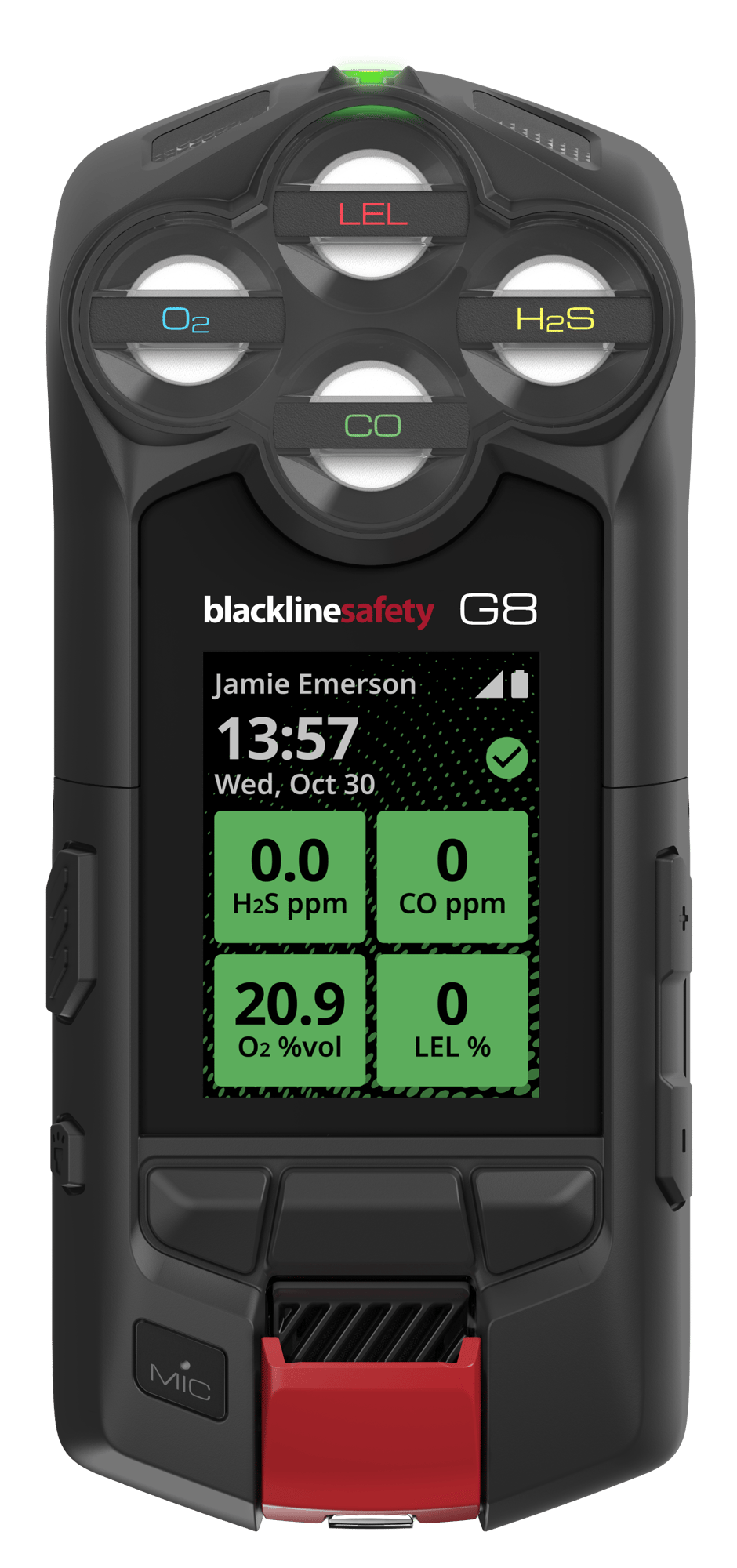
Blackline Personal Gas Detectors and EXO area monitors constantly detect both VOC ambient gas levels and the employee's location, reporting this data back to the cloud wirelessly via cellular or satellite connectivity. These devices utilize advanced PID sensors for VOC detection, capable of measuring very low concentrations of organic chemicals and other air pollutants that can affect indoor air quality.
Every reading streamed to the cloud ensures that all data is immediately available for visualization of PID readings on a map overlay, giving Industrial Hygienists and HSE Managers the ability to identify hotspots and problem areas and take proactive action to address an issue before it becomes an incident. This real-time monitoring is crucial for detecting VOC emissions from various sources such as hazmat, building materials, cleaning supplies, and industrial emissions.
PID para COV
The devices utilize photoionization detection (PID) technology, commonly referred to as a PID detector or photoionization detector, which harnesses UV light to ionize VOC gases—volatile organic compounds—with ionization thresholds below the photon energies emitted by the lamp. This advanced method, often integrated into PID multi-gas monitors, enables the detection of a wide range of organic solvents, including benzene, and other gases at remarkably low concentrations, down to the ppb range (parts per billion), far beyond what’s perceptible to human senses.
With high sensitivity, these calibrated tools measure VOC monitoring needs effectively, identifying compounds with high vapor pressure at room temperature. Many VOCs are notorious for their adverse health effects, potentially affecting the central nervous system, causing throat irritation, and necessitating robust personal protection strategies.
Though many VOC gases remain invisible, their emissions significantly degrade both indoor and outdoor air quality, posing environmental challenges. Characterized by their high vapor pressure, these compounds evaporate readily, mingling with other air pollutants—like oxygen-depleting substances—to form complex mixtures. VOC emissions often go undetected until they reach hazardous levels, making multi-gas monitors essential for detecting leaks and ensuring safety during confined space entry. Alongside other pollutants, VOCs can have serious health implications, emphasizing the need for precise measurement in ppm (parts per million) and comprehensive air quality management. From industrial processes to everyday household products, the diverse sources of volatile organic compounds highlight the critical role of advanced monitoring and control measures.
The G8 gas detection device ecosystem, featuring PID equipped multi-gas monitors, excels at detecting and monitoring VOCs, offering invaluable support in preventing and responding to chemical spills, detecting leaks, and maintaining air quality across various settings. By delivering real-time data on VOC levels with pinpoint accuracy, these devices empower proactive steps to safeguard human health, enhance personal protection, and ensure safer working environments—whether in industrial facilities or confined spaces requiring meticulous environmental oversight.
Aplicações típicas
- Segurança do pessoal
- Higiene industrial
- Contaminação e remediação do solo
- Emissões não intencionais
- Aplicação da lei
- Resposta a emergências
- Detecção de vazamentos
- Monitoramento do perímetro
- Refinarias e petroquímica
- Monitoramento da qualidade do ar
Relatórios de alertas históricos
Os fluxos de gás provenientes de cada dispositivo G8 geram um grande volume de dados que é processado pelo painel Blackline Live . Blackline Analytics os usuários obtenham informações sobre como e onde os equipamentos estão sendo utilizados, onde ocorrem riscos, além de registrar automaticamente cada teste de funcionamento, calibração e exposição a gás.

Tecnologia inovadora de sensores de gás
O ION Science MiniPID 2 oferece resposta dinâmica e confiável a uma ampla gama de compostos orgânicos voláteis (COV) em uma ampla variedade de aplicações.
- • Resistente à umidade
- • Design anticontaminação
- • Vida útil da lâmpada de 10.000 horas
- • Estabilidade de temperatura líder mundial
- • Lâmpada de 10,6 eV
- • Tabela interna de gases com mais de 700 COVs e compostos tóxicos
- • Vida útil esperada > 5 anos
O sensor MiniPID 2 inclui a tecnologia patenteada Fence Electrode Technology para fornecer resultados confiáveis nos ambientes mais desafiadores, oferecendo desempenho líder do setor em resistência à umidade e design anticontaminação, protegendo o sensor contra umidade, poeira e aerossóis. Projetado para amostragem por difusão e bombeamento, o MiniPID 2 oferece um tempo de resposta excepcional.
Incorporando uma lâmpada de longa duração de última geração, o MiniPID 2 oferece estabilidade excepcional e desempenho de longo prazo, permitindo uma detecção confiável por 10.000 horas de uso. Como resultado, o MiniPID 2 requer significativamente menos manutenção do que os sensores PID da geração anterior.